Common Dissertation Statistics Problems and How To Solve Them

Quick Overview

Are dissertation statistics making you feel stressed, confused, or completely stuck? Many doctoral students struggle during the research process because statistics can feel overwhelming without proper guidance. Choosing the wrong test, collecting weak data, or misunderstanding SPSS results can delay graduation and increase stress. That is why many students seek Statistical Consulting for Dissertation support. As a dissertation statistics expert, I help doctoral students simplify research methods, understand data analysis, and complete their degrees with less frustration. My goal is to help students avoid costly mistakes while making the dissertation process easier, clearer, and more manageable.

Why Dissertation Statistics Feel Overwhelming

Many doctoral students feel nervous when statistics enter the dissertation process.

That reaction is very common.

Most students are experts in their professional field, not statistics.

Suddenly they must understand research design, data analysis, statistical tests, and software programs all at once.

That pressure becomes overwhelming very quickly.

Some students spend months trying to teach themselves complicated concepts through online videos or textbooks.

Unfortunately, confusion often grows instead of improving.

That is why support matters.

Students usually learn faster when someone explains statistics in plain English.

Choosing the Wrong Statistical Test

One of the biggest dissertation mistakes involves choosing the wrong statistical test.

Students often select tests before fully understanding their research questions or variables.

For example, a student may choose regression analysis when a ANOVA test fits the study better.

These mistakes create major problems later.

The committee may reject the analysis or request revisions.

That can delay graduation for months.

As a dissertation coach, I help students match their research questions with the correct statistical methods early in the process.

This saves time, money, and stress.

Weak Research Questions Create Bigger Problems

Statistics problems often begin before data collection even starts.

Poor research questions create weak studies.

If the research question lacks clarity, students usually struggle with methodology, variables, and statistical analysis later.

A strong dissertation starts with focused and measurable questions.

Clear research questions help students:


  • Choose the right variables
  • Use the correct statistical tests
  • Interpret results more accurately

Many students underestimate how important this step really is.

Strong planning prevents many future problems.

Problems With Data Collection

Data collection creates another major challenge for doctoral students.

Some students collect too little information.

Others gather data that does not match their research goals.

This creates weak results during analysis.

Students also struggle with surveys, questionnaires, and participant recruitment.

Here are common data collection issues: Common Problem Possible Result Small sample size Weak statistical power Poor survey design Unclear responses Missing data Incomplete analysis Wrong participants Invalid conclusions Weak organization Confusing results

Good planning helps reduce these problems significantly.

Understanding SPSS and Statistical Software

Many students panic when they open SPSS for the first time.

The software looks intimidating.

Students often worry about clicking the wrong button or misreading results.

The truth is most students do not need advanced statistical expertise.

They simply need clear guidance.

I help doctoral students understand:


  • Which tests to run
  • How to enter data properly
  • How to read output tables
  • How to explain results clearly

Once students understand the logic behind the process, their confidence usually improves quickly.

Statistics become much less frightening.

Small Sample Sizes and Research Issues

Sample size problems appear very often in dissertation research.

Some students cannot recruit enough participants.

Others lose responses during the study.

Small sample sizes can weaken statistical accuracy and reduce confidence in the findings.

This does not always mean the study has failed.

Researchers can often adjust methods or redesign parts of the analysis.

That is why early guidance matters so much.

Students who seek support early usually avoid larger problems later.

Why Students Misinterpret Results

Many doctoral students struggle with interpreting statistical output correctly.

They may misunderstand significance levels, correlations, or regression findings.

This creates confusion while writing Chapter 4 and Chapter 5.

The problem is not intelligence.

Most students simply have not received proper statistical training.

That is why I focus heavily on explanation and understanding instead of simply running analyses for students.

Students should understand what their results actually mean.

That confidence helps during dissertation presentations too.

The Emotional Stress Behind Dissertation Statistics

Statistics do not only affect academics.

They affect emotional health too.

I regularly speak with students who feel exhausted, discouraged, and emotionally drained during the dissertation process.

Some students spend thousands of dollars on large consulting companies that provide little personal support.

Others feel ignored or confused after receiving generic advice.

That is why I work differently.

Students work directly with me throughout the process.

There is one dissertation coach, not a large team of impersonal consultants.

My students often complete their degrees sooner, with less stress and lower overall costs.

That personal support matters.

How Personal Dissertation Support Helps

Good dissertation guidance provides more than statistical answers.

It provides clarity, confidence, and direction.

My statistical consultation services focus on helping students understand the research process step by step.

I explain complicated topics in simple language.

My book, Simplifying Statistics for Graduate Students, was written for students who feel overwhelmed by statistics and research methods.

Doctoral students deserve support that feels practical, honest, and personal.

Research should not leave students emotionally depleted or drowning in debt.

Closing Thoughts

Dissertation statistics problems are extremely common, but students do not have to face them alone.

From choosing the right test to interpreting results correctly, every stage of the research process can feel easier with proper support.

As a dissertation statistics expert, I help doctoral students simplify research methods, reduce stress, and move toward graduation with greater confidence.

If you want personal guidance instead of impersonal consulting services, consider working directly with me during your doctoral journey.

FAQs

1. Why do doctoral students struggle with dissertation statistics?

Many students have limited statistical training before beginning their dissertations. Research methods, software, and statistical analysis can feel overwhelming without guidance.

2. What is the most common dissertation statistics mistake?

Choosing the wrong statistical test is one of the most common problems. This often creates issues during analysis and dissertation review.

3. How can dissertation consultants help students?

Consultants help students understand methodology, choose proper statistical tests, analyze data, and interpret research findings more clearly.

4. Why is data collection important in dissertation research?

Good data collection improves research accuracy and helps students produce stronger and more reliable conclusions.

5. What software commonly use for statistics?

Many students use SPSS for dissertation statistics and quantitative data analysis.

6. How does personal dissertation coaching reduce stress?

Personal coaching provides direct support, feedback, and explanation throughout the dissertation process, helping students feel more confident and less overwhelmed.

Author Bio

This blog is prepared by the team of Dr. Susan Carroll. The objective is to help doctoral students better understand dissertation statistics, research methods, and data analysis while reducing stress and confusion during the doctoral journey.

Business Details

Dr. Susan Carroll
Website: https://www.dissertation-statistics.com/

Services:
Dr. Susan Carroll provides one on one dissertation coaching, research support, and dissertation statistics guidance for doctoral students. Students work directly with her for personalized support focused on faster degree completion with less stress and lower costs.

ANOVA Dissertation Help for Beginners

Need easy ANOVA Dissertation Help as a beginner? Do statistics make you nervous? Do words like ANOVA, p values, or SPSS feel confusing? Many graduate students feel lost when they reach the statistics part of their dissertation. I help students understand ANOVA in very simple words. I guide them step by step so they do not feel confused or stressed. My goal is to help doctoral students finish their degrees faster, spend less money, and feel more confident during research. Students work directly with me, instead of speaking with different people every week. This personal support helps students stay focused and move forward with less stress.

A lot of doctoral students are good at research and writing, but statistics feels difficult. They worry about making mistakes in their dissertation.

That is why simple guidance matters.

I explain research methods and statistics in easy language. Students can comfortably ask questions without worrying about being judged.

ANOVA Dissertation Help for Beginners

Why Students Struggle with ANOVA

ANOVA, or Analysis of Variance, is a statistical test used to compare results between three or more groups to see if they are significantly different from each other. Researchers often use one way ANOVA to study the relationship between one independent variable and one numerical dependent variable.


  • For example, a company may use ANOVA to examine whether different Understanding research questions employee training levels affect customer satisfaction ratings. In this case, the training level is the independent variable, while customer satisfaction is the dependent variable. If the test shows a statistically significant result, it means the groups performed differently and the null hypothesis is rejected. ANOVA works by measuring variance, which shows how spread out the data values are from their average.

Many students never learn advanced statistics before starting their doctorate.

When they begin working on data analysis, they suddenly see many difficult terms and numbers.

Students often struggle with:


  • Understanding research questions
  • Choosing the right test
  • Understanding SPSS output
  • Explaining results
  • Writing the findings section

This can make students feel stuck.

Some even delay graduation because they feel overwhelmed.

What an ANOVA Consultation Does

It helps students understand the process clearly.

I can help students:


  • Choose the correct ANOVA test
  • Understand what the results mean
  • Read SPSS output
  • Write results correctly
  • Feel more confident with statistics

Students do not need to be math experts.

Most students simply need someone who explains things clearly and patiently.

How I Make Statistics Easier

I wrote my book, Simplifying Statistics for Graduate Students, because I wanted students to stop feeling anxious about statistics.

I use simple examples and easy words.

I focus on helping students understand:


  • What the numbers mean
  • Why the test matters
  • How to explain results in the dissertation

Many students tell me they finally understand statistics after our sessions.

That confidence helps them move faster through the dissertation process.

Why Personal Support Helps

Many large dissertation websites give students different consultants every time.

That can feel confusing and stressful.

My approach is different.

Students work directly with me from start to finish.

I learn about their topic, goals, and challenges personally.

This helps me give advice that actually fits their research instead of generic answers.

Students also feel more comfortable asking questions when they work with one trusted coach.

Problems Many Doctoral Students Face

The dissertation process can feel emotionally exhausting.

Many students deal with:


  • Stress
  • Fear of failure
  • Confusion about statistics
  • Long delays
  • High consulting costs

Some students spend thousands of dollars and still feel lost.

Others feel burned out before they finish their degree.

I feel students should receive guidance that is clear, supportive, and genuine.

Students should not end up with huge debt and unfinished dissertations.

What Students Learn During Coaching

Students learn much more than statistics.

They also learn how to feel confident about their research.

Support Area

  • Research Methods
  • ANOVA Testing
  • SPSS Output
  • Dissertation Writing
  • Confidence Building

What Students Learn

  • How to choose the right test
  • How group comparison works
  • How to read results
  • How to explain findings
  • How to feel less stressed

Many students start feeling nervous. Over time, they become more comfortable with data analysis. Many doctoral students also need help with power analysis sample size dissertation requirements because choosing the correct sample size is an important part of research design. I help them understand how many participants their study needs before collecting data.

How Coaching Reduces Stress

Personal coaching helps students feel calmer.

They get direct answers instead of spending hours searching online.

This saves time and lowers frustration.

Many doctoral students also balance jobs, family, and school at the same time.

Simple guidance can make the process easier to manage.

Students often feel more motivated when they know someone is helping them step by step.

Why Experience Matters

Dissertation statistics is not only about running software.

Students also need help understanding research design, committee feedback, and dissertation writing.

Because I specialize in dissertation statistics and research methods, I understand the common problems students face.

Experience matters when students feel uncertain or overwhelmed.

Working with one experienced consultant often feels less stressful than using large anonymous services.

Closing Thoughts

ANOVA does not have to feel scary for beginners. With the right support, students can understand statistics step by step in simple language.

My goal is to help doctoral students finish their degrees with less stress, lower costs, and more confidence.

Students deserve personal support during an important part of their academic journey.

If you need help with dissertation statistics or research methods, consider working with me for your doctoral studies.

FAQs

1. What is ANOVA in a dissertation?

ANOVA is a method researchers use to compare results between different groups in a study. Many graduate students use it to answer research questions in education, psychology, healthcare, and business studies.

2. Why do students struggle with ANOVA?

Many students have little experience with statistics before starting their dissertation. Terms, statistical output, and data analysis can feel confusing without clear explanations and personal guidance.

3. How can a consultant help with ANOVA?

Consultation helps students choose the right test, understand results, read SPSS output, and write findings correctly. Good support also helps students feel less stressed during the dissertation process.

4. Why is one-on-one coaching helpful?

One-on-one coaching gives students direct support from the same person throughout the dissertation process. This helps students feel more comfortable, less confused, and more confident about their work.

5. Do students need advanced math skills for ANOVA?

No. Most students can understand ANOVA when it is explained in simple language. Clear examples and patient guidance are often more important than advanced math knowledge.

6. How does coaching help students finish faster?

Coaching helps students avoid confusion, save time, and make better research decisions. Personal guidance can reduce delays and help students move through the dissertation process more smoothly.

Author Bio

This blog is prepared by the team at Dissertation Statistics by Dr. Susan Carroll. The goal is to help graduate students understand dissertation statistics and research methods using clear and simple guidance.

Business Details

Dissertation Statistics by Dr. Susan Carroll
Website: https://www.dissertation-statistics.com/

Dr. Susan Carroll is an expert in dissertation statistics and research methods. She provides personal one-on-one dissertation coaching for graduate students and is the author of Simplifying Statistics for Graduate Students.

Why Null Hypotheses and Research Hypotheses Matter in Statistical Research

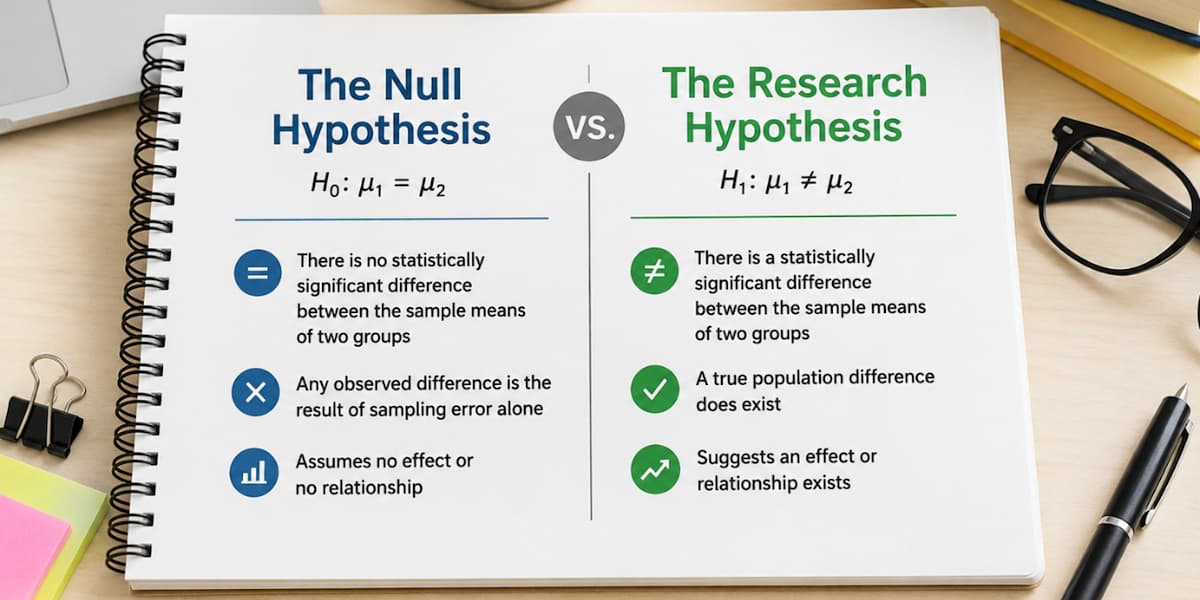
Many graduate students hear the terms null hypotheses and research hypotheses early in their dissertation journey, but they are not always sure what those terms really mean. In simple words, the research hypotheses explains what a student thinks may happen in the study. The null hypotheses says there is no relationship or difference between the groups or variables being studied. Researchers use statistics to test the null hypotheses and decide if the findings are strong enough to support the research idea.

This process helps students make conclusions based on evidence instead of personal opinions. In my experience, students understand statistics much better once they understand how hypotheses work


Quick Overview

Have you ever looked at a dissertation and wondered why hypotheses are such a big part of research?

A lot of students ask me this question.

Most research studies begin with a simple idea. A student notices a problem, asks a question, or becomes curious about something.

That curiosity turns into research.

But before collecting data, students need a clear direction. That is where hypotheses become useful.

They help students stay focused and understand what they are trying to test.

Many doctoral students feel nervous when they first start learning statistics. Some students worry they are “bad at math.” Others feel overwhelmed by research language.

I understand that feeling very well.

Through my book Simplifying Statistics for Graduate Students, I want to address this issue. I wanted students to stop feeling intimidated by statistics and research methods.

What Is a Research Hypotheses?

A research hypotheses is simply a prediction.

It explains what the researcher expects to happen in the study.

For example, a student may believe employees who receive training perform better at work. That belief becomes the research hypotheses.

The research hypotheses is usually written in a positive form because it predicts a relationship or difference.

This helps guide the study from beginning to end.

Without a clear hypotheses, students may feel lost during data collection and analysis.

Why Do Researchers Use a Null Hypotheses?

The null hypotheses is the opposite idea.

It states that no relationship or difference exists.

Researchers test the null hypotheses using statistics.

If the statistical results are strong enough, the null hypotheses is rejected.

If the results are weak, the researcher accepts the null or fails to reject it.

This process may sound technical, but it really helps researchers stay objective.

Instead of making assumptions, students use evidence from the data.

How Hypotheses Testing Works

Many students think hypotheses testing is very difficult.

Actually, the steps are fairly straightforward.

First, the researcher writes the null hypotheses.

Next, the researcher chooses a significance level such as .05 or .01.

A .05 level means there is a 95 percent confidence level.

A .01 level means there is a 99 percent confidence level and is considered more strict.

After choosing the significance level, the researcher runs the statistical test.

Then the results are examined carefully.

The goal is to decide whether the null hypotheses should be rejected or accepted.

What Does Statistical Significance Mean?

Students often hear the phrase “statistically significant,” but many are unsure what it means.

Statistical significance means the findings are unlikely to have happened by chance alone.

For example, a study may show that a training program improved employee performance.

If the statistical test is significant, the null hypotheses is rejected.

But students should remember something important.

A significant result does not always mean the finding is meaningful in real life.

I often encourage students to think beyond the numbers.

Do the results actually matter in a practical way?

That question is just as important as the statistical result itself.

Why Probability Levels Matter

Probability levels help researchers decide how careful they want to be when testing hypotheses.

Most dissertations use either:


  • .05 significance level
  • .01 significance level

Researchers also learn about errors in hypotheses testing.

A Type I error happens when the null hypotheses is rejected incorrectly.

A Type II error happens when a false null hypotheses is accepted.

At first, these concepts may sound confusing. But most students understand them better once they see real examples from research studies.

Understanding Directional and Nondirectional Hypotheses Types

Students should also learn about directional and nondirectional hypotheses types.

A directional hypotheses predicts the direction of the result.

For example, a student may predict that remote work increases employee satisfaction.

A nondirectional hypotheses only predicts that a relationship exists. It does not predict whether the result will increase or decrease.

This choice affects the type of statistical testing used in the study.

That is why students should think carefully before writing hypotheses.

Why Power Analysis Is Helpful

Power analysis helps students decide how many participants are needed for a study.

This step is important because a very small sample size may lead to weak results.

Many graduate students struggle with sample size decisions during dissertation research.

I often explain power analysis in simple language because students become less anxious once they understand why sample size matters.

Good planning early in the dissertation process can prevent many problems later.

Common Student Mistakes

I often see students make the same mistakes during hypotheses testing.

Some students write hypotheses that are too vague.

Others confuse the research hypotheses with the null hypotheses.

Some students choose the wrong statistical test or focus only on statistical significance while ignoring practical meaning.

I always remind students that simple and clear writing is usually better than overly complicated language.

Research should be understandable.

Closing Thoughts

Hypotheses testing is a major part of dissertation research. It helps students test ideas carefully and make decisions based on data instead of assumptions.

Many students feel stressed when they first learn statistics, but confidence grows when concepts are explained clearly and patiently.

Students do not need to feel alone during the dissertation process.

If you or your loved ones need support with dissertation statistics or research methods, consider working with me for personal guidance and dissertation help.

FAQs

1. What is a null hypotheses?

A null hypotheses states that no relationship or difference exists between variables in a study. Researchers test it with statistics to determine whether the findings are strong enough to reject it.

2. What is a research hypotheses?

A research hypotheses predicts that a relationship or difference exists in the study. It explains what the researcher expects to discover during the research process.

3. Why are hypotheses important in research?

Hypotheses help researchers stay focused and organized. They guide data collection, statistical testing, and interpretation of results throughout the research study.

4. What happens when the null hypotheses is rejected?

Rejecting the null hypotheses means the results suggest a meaningful relationship or difference exists between the variables being studied.

5. What is the difference between directional and nondirectional hypotheses?

A directional hypotheses predicts the direction of the result, while a nondirectional hypotheses only predicts that a relationship exists without predicting the direction.

6. Why do graduate students struggle with hypotheses testing?

Many students feel overwhelmed by statistics terms and research methods. Simple explanations, examples, and personal guidance usually help students understand the process more easily.

Author Bio

This blog is prepared by the team at Dissertation Statistics by Dr. Susan Carroll. The purpose is to help graduate students understand dissertation statistics and research methods in a clear and practical way.

Business Details

Dissertation Statistics by Dr. Susan Carroll
Website: Dissertation Statistics by Dr. Susan Carroll

Dr. Susan Carroll specializes in dissertation statistics and research methodology. She provides personal dissertation guidance for graduate students and is the author of Simplifying Statistics for Graduate Students.

Dissertation consultant

Dr. Susan Carroll is an expert in dissertation statistics and research methods.

I have provided one-on-one technical expertise and personalized coaching to numerous graduate students across the county.