

ANOVA Dissertation Help for Beginners
Need easy ANOVA Dissertation Help as a beginner? Do statistics make you nervous? Do words like ANOVA, p values, or SPSS feel confusing? Many graduate students feel lost when they reach the statistics part of their dissertation. I help students understand ANOVA in very simple words. I guide them step by step so they do not feel confused or stressed. My goal is to help doctoral students finish their degrees faster, spend less money, and feel more confident during research. Students work directly with me, instead of speaking with different people every week. This personal support helps students stay focused and move forward with less stress.
A lot of doctoral students are good at research and writing, but statistics feels difficult. They worry about making mistakes in their dissertation.
That is why simple guidance matters.
I explain research methods and statistics in easy language. Students can comfortably ask questions without worrying about being judged.

Why Students Struggle with ANOVA
ANOVA, or Analysis of Variance, is a statistical test used to compare results between three or more groups to see if they are significantly different from each other. Researchers often use one way ANOVA to study the relationship between one independent variable and one numerical dependent variable.
- For example, a company may use ANOVA to examine whether different Understanding research questions employee training levels affect customer satisfaction ratings. In this case, the training level is the independent variable, while customer satisfaction is the dependent variable. If the test shows a statistically significant result, it means the groups performed differently and the null hypothesis is rejected. ANOVA works by measuring variance, which shows how spread out the data values are from their average.
Many students never learn advanced statistics before starting their doctorate.
When they begin working on data analysis, they suddenly see many difficult terms and numbers.
Students often struggle with:
- Understanding research questions
- Choosing the right test
- Understanding SPSS output
- Explaining results
- Writing the findings section
This can make students feel stuck.
Some even delay graduation because they feel overwhelmed.
What an ANOVA Consultation Does
It helps students understand the process clearly.
I can help students:
- Choose the correct ANOVA test
- Understand what the results mean
- Read SPSS output
- Write results correctly
- Feel more confident with statistics
Students do not need to be math experts.
Most students simply need someone who explains things clearly and patiently.
How I Make Statistics Easier
I wrote my book, Simplifying Statistics for Graduate Students, because I wanted students to stop feeling anxious about statistics.
I use simple examples and easy words.
I focus on helping students understand:
- What the numbers mean
- Why the test matters
- How to explain results in the dissertation
Many students tell me they finally understand statistics after our sessions.
That confidence helps them move faster through the dissertation process.
Why Personal Support Helps
Many large dissertation websites give students different consultants every time.
That can feel confusing and stressful.
My approach is different.
Students work directly with me from start to finish.
I learn about their topic, goals, and challenges personally.
This helps me give advice that actually fits their research instead of generic answers.
Students also feel more comfortable asking questions when they work with one trusted coach.
Problems Many Doctoral Students Face
The dissertation process can feel emotionally exhausting.
Many students deal with:
- Stress
- Fear of failure
- Confusion about statistics
- Long delays
- High consulting costs
Some students spend thousands of dollars and still feel lost.
Others feel burned out before they finish their degree.
I feel students should receive guidance that is clear, supportive, and genuine.
Students should not end up with huge debt and unfinished dissertations.
What Students Learn During Coaching
Students learn much more than statistics.
They also learn how to feel confident about their research.
Support Area
- Research Methods
- ANOVA Testing
- SPSS Output
- Dissertation Writing
- Confidence Building
What Students Learn
- How to choose the right test
- How group comparison works
- How to read results
- How to explain findings
- How to feel less stressed
Many students start feeling nervous. Over time, they become more comfortable with data analysis. Many doctoral students also need help with power analysis sample size dissertation requirements because choosing the correct sample size is an important part of research design. I help them understand how many participants their study needs before collecting data.
How Coaching Reduces Stress
Personal coaching helps students feel calmer.
They get direct answers instead of spending hours searching online.
This saves time and lowers frustration.
Many doctoral students also balance jobs, family, and school at the same time.
Simple guidance can make the process easier to manage.
Students often feel more motivated when they know someone is helping them step by step.
Why Experience Matters
Dissertation statistics is not only about running software.
Students also need help understanding research design, committee feedback, and dissertation writing.
Because I specialize in dissertation statistics and research methods, I understand the common problems students face.
Experience matters when students feel uncertain or overwhelmed.
Working with one experienced consultant often feels less stressful than using large anonymous services.
Closing Thoughts
ANOVA does not have to feel scary for beginners. With the right support, students can understand statistics step by step in simple language.
My goal is to help doctoral students finish their degrees with less stress, lower costs, and more confidence.
Students deserve personal support during an important part of their academic journey.
If you need help with dissertation statistics or research methods, consider working with me for your doctoral studies.
FAQs
1. What is ANOVA in a dissertation?
ANOVA is a method researchers use to compare results between different groups in a study. Many graduate students use it to answer research questions in education, psychology, healthcare, and business studies.
2. Why do students struggle with ANOVA?
Many students have little experience with statistics before starting their dissertation. Terms, statistical output, and data analysis can feel confusing without clear explanations and personal guidance.
3. How can a consultant help with ANOVA?
Consultation helps students choose the right test, understand results, read SPSS output, and write findings correctly. Good support also helps students feel less stressed during the dissertation process.
4. Why is one-on-one coaching helpful?
One-on-one coaching gives students direct support from the same person throughout the dissertation process. This helps students feel more comfortable, less confused, and more confident about their work.
5. Do students need advanced math skills for ANOVA?
No. Most students can understand ANOVA when it is explained in simple language. Clear examples and patient guidance are often more important than advanced math knowledge.
6. How does coaching help students finish faster?
Coaching helps students avoid confusion, save time, and make better research decisions. Personal guidance can reduce delays and help students move through the dissertation process more smoothly.
Author Bio
This blog is prepared by the team at Dissertation Statistics by Dr. Susan Carroll. The goal is to help graduate students understand dissertation statistics and research methods using clear and simple guidance.
Business Details
Dissertation Statistics by Dr. Susan Carroll
Website: https://www.dissertation-statistics.com/
Dr. Susan Carroll is an expert in dissertation statistics and research methods. She provides personal one-on-one dissertation coaching for graduate students and is the author of Simplifying Statistics for Graduate Students.
Related Posts

Common Dissertation Statistics Problems and How To Solve Them
Quick Overview Are dissertation statistics making you feel stressed, confused, or completely stuck? Many doctoral students struggle during…
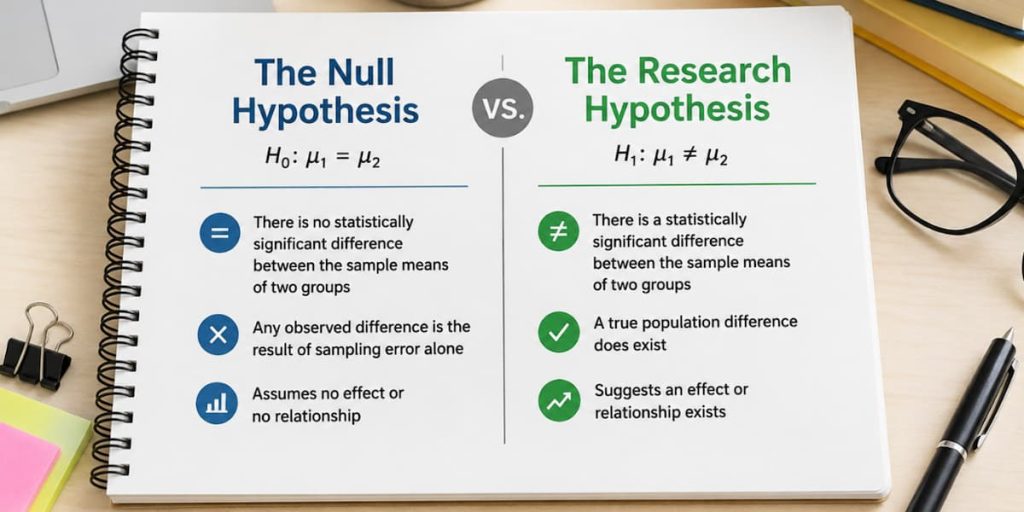
Why Null Hypotheses and Research Hypotheses Matter in Statistical Research
Many graduate students hear the terms null hypotheses and research hypotheses early in their dissertation journey, but they are not…